Extraordinary Voyages
Journeys to the ends of the earth, under its seas, and into its centre.
-
1
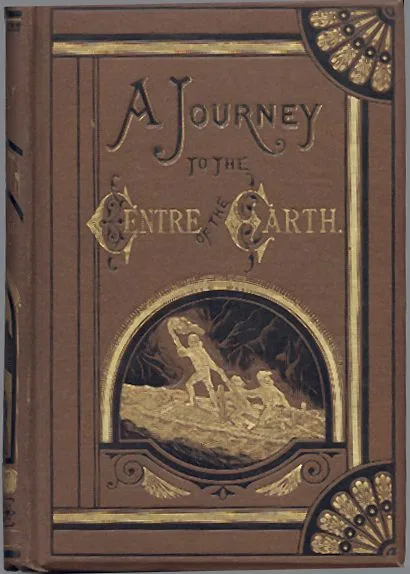
Journey to the Centre of the Earth
Book 1
Ebook · Paperback
Journey to the Centre of the Earth, also translated with the variant titles A Journey to the Center of the Earth and A Journey into the Interior of the Earth, is a classic science fiction novel written by French novelist Jules Verne. It was first published in French in 1864, then reissued in 1867 in a revised and expanded edition. Professor Otto Lidenbrock is the tale's central figure, an eccentric German scientist who decodes a message from a 16th century Icelandic alchemist who claims to have reached to the very center of the earth via volcanic tubes in the crater of the celebrated inactive Icelandic volcano Snæfellsjökull. Lidenbrock, his nephew Axel, and their Icelandic guide Hans rappel into the volcano, then contend with many dangers, including cave-ins, subpolar tornadoes, an underground ocean, and a variety of prehistoric life. Eventually the three explorers are spewed back to the surface by the eruption of an active volcano, Stromboli, located in southern Italy.
-
2
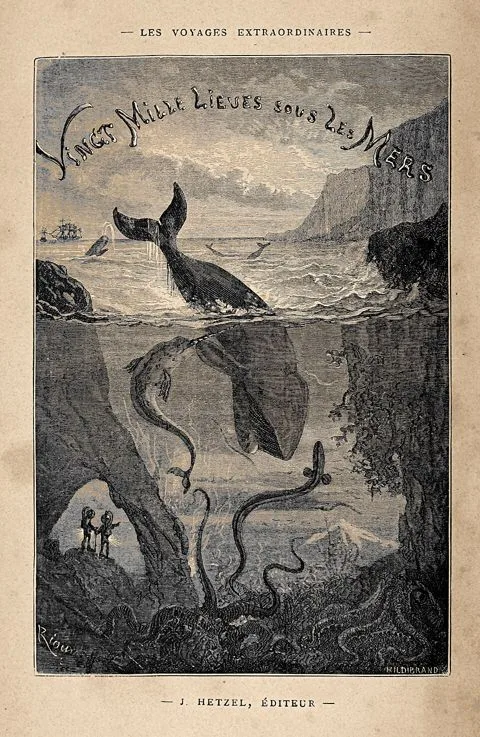
Twenty Thousand Leagues Under the Sea
Book 2
Ebook · Paperback
Twenty Thousand Leagues Under the Seas is a science fiction adventure novel by the French writer Jules Verne. It was originally serialised from March 1869 to June 1870 in Pierre-Jules Hetzel's French fortnightly periodical, the Magasin d'éducation et de récréation. A deluxe octavo edition, published by Hetzel in November 1871, included 111 illustrations by Alphonse de Neuville and Édouard Riou.
-
3
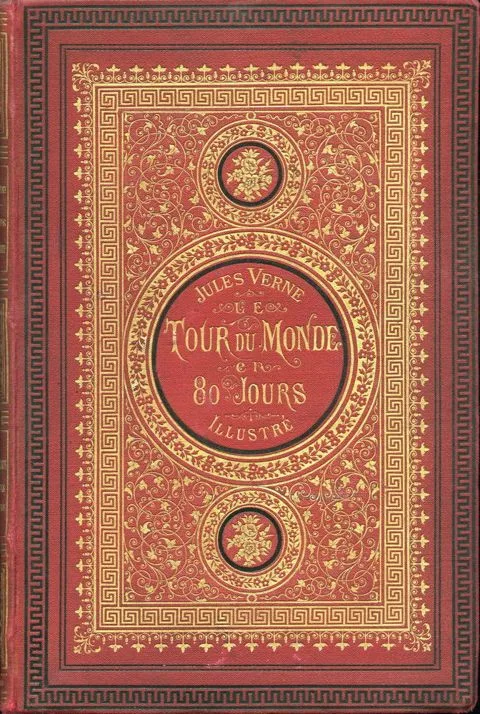
Around the World in Eighty Days
Book 3
Ebook · Paperback
Around the World in Eighty Days is an adventure novel by the French writer Jules Verne, first published in French in 1872. In the story, Phileas Fogg of London and his newly employed French valet Jean Passepartout attempt to circumnavigate the world in 80 days on a wager of £20,000 set by his friends at the Reform Club. It is one of Verne's most acclaimed works.